When “Go Home” Becomes the Message: Kenya’s Foreign Trader Crackdown Raises South Africa-Style Xenophobia Questions
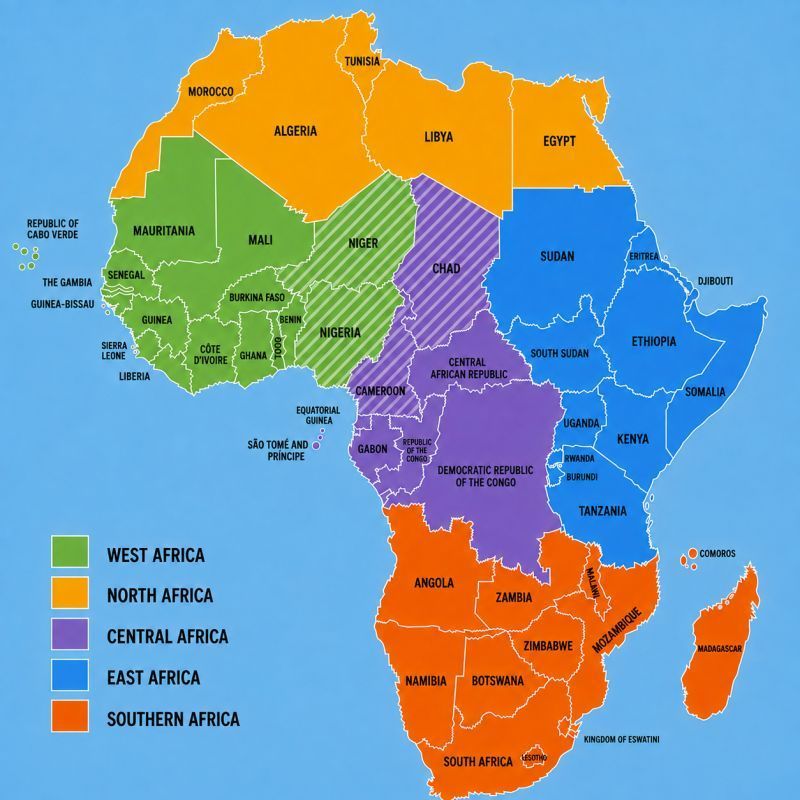
There is a sentence that can change the atmosphere of a marketplace in seconds:
“Foreigners must leave.”
For a Burundian trader in Nairobi, Kisumu, Eldoret or Mombasa, the words can mean much more than a change in business regulation; they can mean uncertainty, they can mean a shop closed overnight, they can mean money trapped in stock, they can mean children wondering whether their parents will still have an income tomorrow.
And, perhaps most importantly, they can create a question that Africa has struggled with for decades:
At what point does protecting local economic interests become hostility towards fellow Africans?
The directive that has unsettled foreign traders
President William Ruto's recent pronouncements on foreign nationals involved in small-scale and informal businesses have sent ripples through migrant communities, particularly among Burundians and other East African nationals.
The government has clarified that the measures are intended to regulate small-scale retail and informal trade and protect local livelihoods, not to promote xenophobia. Government spokesperson Charles Owino said the directive is aimed at ensuring that foreign traders comply with Kenya's regulatory framework and that those with the appropriate documentation can continue operating legally.
But the reaction on the ground tells another part of the story.
Reports indicate that hundreds of Burundians sought assistance and travel documents from their embassy in Nairobi amid fears that a government crackdown could force undocumented traders to leave Kenya. The government subsequently announced a temporary amnesty for undocumented East Africans and urged affected individuals to regularise their status.
South Africa's warning: When economic frustration finds a foreign face
South Africa has lived through some of Africa's most painful episodes of xenophobic violence.
Foreign-owned shops have been attacked. Migrants have been threatened. Businesses have been looted. Families have fled their homes.
The latest wave of anti-immigrant sentiment in South Africa in 2026 has again demonstrated how quickly economic frustration can become hostility towards migrants. Thousands of African migrants have fled amid protests and violence, with some communities demanding that foreigners leave.
The tragedy is that many of the people being targeted are not wealthy foreigners; they are Africans, they are shopkeepers, street traders, taxi drivers, construction workers, domestic workers, small entrepreneurs and the list goes on…….
But Kenya has a legitimate question too
It would be simplistic and unfair to dismiss every Kenyan concern about foreign traders as xenophobia. Kenyan small-business owners are facing genuine economic pressure. A local trader who has invested years of savings into a shop may legitimately ask:
Why should a foreign national be allowed to operate a business without the same licences, taxes, permits and regulatory obligations expected of Kenyan citizens?
That is a legitimate policy question; if someone is operating illegally, regardless of nationality, the law should apply, if a business requires a licence, the licence should be obtained, if a work or business permit is required, it should be secured, if taxes are legally payable, they should be paid.
Kenya's immigration framework provides specific categories of permits for foreign nationals engaging in business and trade, including Class G permits for specific trade, business or consultancy. EAC nationals also have a specific Class R permit framework.
The challenge, therefore, is not whether Kenya should regulate. The challenge is how it regulates.
Burundi is not “foreign” in the ordinary African sense
There is another dimension that makes this debate particularly sensitive.
Burundi and Kenya are both members of the East African Community.
The EAC Treaty envisages cooperation on the free movement of persons, labour and services and the right of establishment and residence.
That does not mean that every EAC citizen automatically has an unrestricted right to establish any business without complying with national laws.
But it does mean that the political conversation cannot be separated from the larger African project of regional integration.
The real danger is the language
History has repeatedly demonstrated that xenophobia rarely begins with violence.
It often begins with language.
“Those people are taking our jobs.”
“They are taking our businesses.”
“They don't pay taxes.”
“They are criminals.”
“They are flooding our country.”
“Send them home.”
These statements may contain isolated truths, exaggerated claims or outright misinformation.
But repeated often enough, they can create a powerful social narrative.
South Africa's experience shows what can happen when political frustration, unemployment, inequality, misinformation and anti-migrant mobilisation reinforce one another.
Kenya can choose a different path
There is a significant difference between immigration enforcement and xenophobia.
There is also a difference between protecting local enterprise and attacking foreigners.
Kenya can enforce its laws without humiliating people.
It can require documentation without demonising nationalities.
It can protect Kenyan traders without portraying Burundians, Congolese, Ugandans, Tanzanians or other Africans as enemies.
It can regularise undocumented businesses rather than immediately pushing vulnerable families into desperation.
And where people are operating legally, Kenya can protect their rights while ensuring they compete fairly.
The government's temporary amnesty for undocumented East Africans is therefore potentially important, not simply as an immigration measure, but as an opportunity to turn confrontation into regularisation.
Africa needs to have this conversation before anger makes the decision for us.
PanAfricanMail will continue following this story and examining what it means for African traders, migrants, entrepreneurs and the future of regional integration.
Comments
You must be logged in to post a comment.